Dr. Terence J. Tarnowsky
Terence J. Tarnowsky is a Scientist on the Prompt Diagnostics Team in Physics Division (P-2) at Los Alamos National Laboratory (LANL) and an Adjunct Professor at the Facility for Rare Isotope Beams (FRIB) at Michigan State University.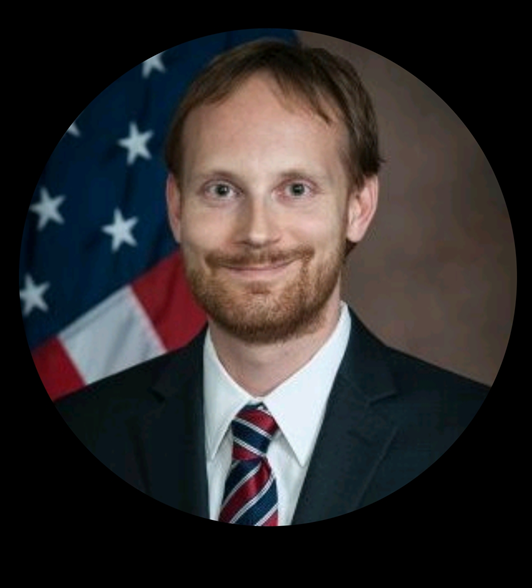
He earned his Ph.D. in experimental high-energy nuclear physics from Purdue University, where he studied heavy-ion collisions and the quark-gluon plasma in the Solenoidal Tracker at RHIC (STAR) Experiment at the Relativistic Heavy Ion Collider (RHIC). His career has included research at the National Superconducting Cyclotron Laboratory at Michigan State University and work with the U.S. Army at the United States Military Academy.
At LANL, his work has spanned nuclear diagnostic data analysis, high-performance computing, and national security applications. His current research focuses on developing new methods for extracting, analyzing, and interpreting complex nuclear data. For the 28th International Conference on the Application of Accelerators in Research and Industry (CAARI 2026), he is presenting work on accelerator-driven molten-salt technology for commercial tritium production to support deuterium-tritium (D-T) fusion energy.
Professor François Schiettekatte
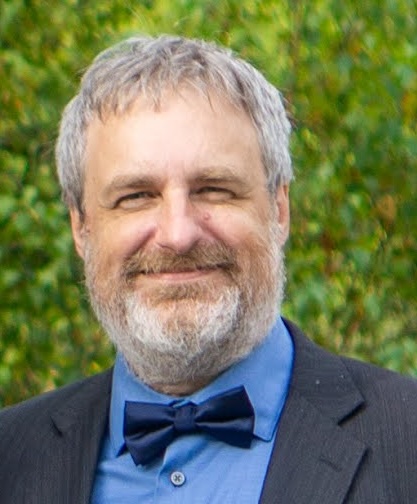 Faculty in the département de physique of Université de Montréal since 2000, François Schiettekatte is a specialist in ion beam interactions with materials, more specifically in ion beam analysis and ion implantation, especially regarding the damage in semiconductors, from their amorphization and relaxation to the use of defects to modify quantum structures. This expertise led him to become interested in the materials used to fabricate the mirrors of gravitational wave detectors, his group investigating different strategies to improve those mirrors. Since 2022, he serves as the chair of the Optics Working Group for the LIGO Scientific Collaboration. Furthermore, he specializes in solid-state reactions at the nanoscale, which his group has studied using various techniques, including nanocalorimetry, by observing, for example, Ni layers a few nanometers thick reacting with Si. He is the author or co-author of more than 130 scientific articles on these and other topics.
Professor Thirumalai Venkatesan
Prof. T. Venkatesan is currently with the Center for Quantum Research and Technology (Professor of Physics and ECE) at University of Oklahoma (OU), and Scientific affiliate at NIST Gaithersburg. He is a senior advisor to the office of the Vice President for research.  As the inventor of the pulsed laser deposition (PLD) process, he has over 800 papers and 34 patents in terms of his citations (Over 59,112 with a hirsch Index of 124- Google Scholar). He is a Fellow of the Royal Society (FRS), National Academy of Inventors (USA), Foreign member of the Indian National Academy of Science, Singapore National Academy of Science, Asia-Pacific Artificial Intelligence Academy, World Innovation Foundation, American Physical Society (APS), Materials Research Society (MRS), Academician of the Asia Pacific Academy of Materials, winner of the Bellcore Award of excellence, George E. Pake Prize awarded by APS (2012), Distinguished Lectureship on the Applications of Physics Award- APS (2020), President’s gold medal of the Institute of Physics, Singapore, Provost Chair Professor at NUS, Guest Professor at Tsinghua University, past member of the Physics Policy Committee (Washington DC), the Board of Visitors at UMD and the Chairman, Forum of Industry and Applications of Physics at APS. He was awarded the outstanding alumnus award from two Indian Institute of Technologies- Kanpur (2015) and Kharagpur (2016), India. He was the 2024 Jubilee Chair Professor of the Indian Academy of Sciences. He has founded several startups (over seven) and is the President of Neocera and CEO of Neocera Magma, companies manufacturing equipment for specialty coatings (pulsed laser deposition systems) and semiconductor fault isolation (using magnetic field imaging systems).